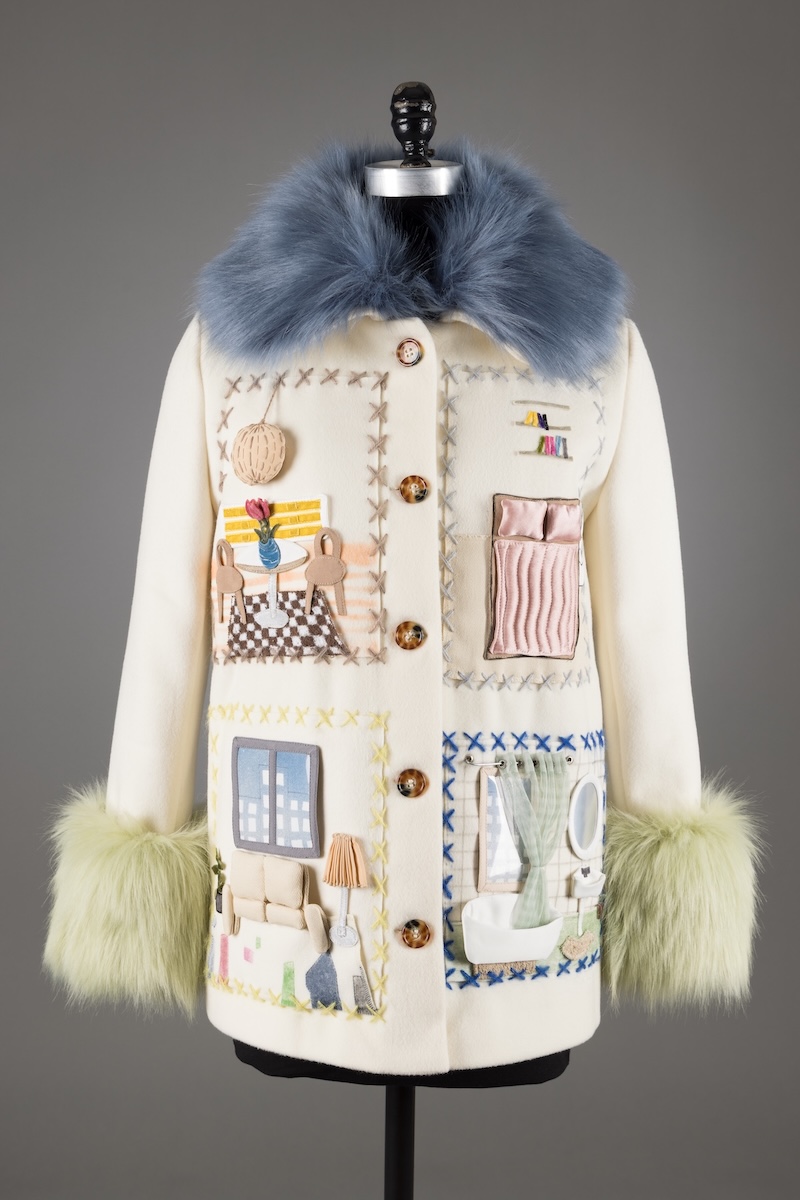
Wool coat appliquéd with furnished rooms.
Details
September 16, 2026 – January 3, 2027
The Museum at FIT
Special Exhibitions Gallery
227 West 27th Street at Seventh AvenueNew York, NY 10001
Links & Downloads
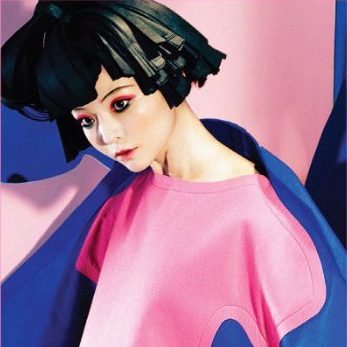
A groundbreaking exhibition examining the enduring and often unexpected relationship between dolls and fashion, Doll Dressing centers on the cultural interplay between dolls and dressed appearance in the twentieth and twenty-first centuries. Featuring more than 170 objects — including fashion dolls displayed alongside full-size garments, accessories, videos, and artworks — the exhibition highlights how the influence of dolls extends far beyond childhood play. Curated by Dr. Colleen Hill, senior curator of costume at MFIT, Doll Dressing features designers and labels including Balenciaga, Comme des Garçons, Maison Martin Margiela, Marc Jacobs, Patrick Kelly, Loewe, Louis Vuitton, Moschino, Anna Sui, and Undercover, ultimately showing how dolls aren’t just toys — they’re muses, canvases, and even prototypes for designers.
Doll Dressing poses a compelling and previously overlooked question: How have dolls influenced fashion? While dolls such as Barbie are widely recognized as objects of play, these dolls have historically functioned as powerful transmitters — and even originators — of style. As early as the fourteenth century, dolls circulated throughout Europe as miniature fashion models, communicating the latest trends in three-dimensional detail. By the early twentieth century, dolls were not only reflecting fashion but actively shaping it. Hill defines this phenomenon as “doll dressing,” a concept encompassing clothing, accessories, hair, makeup, and even gestures that draw inspiration from dolls. The exhibition ultimately reveals that doll dressing can be both expressive and subversive, offering a means of exploring identity, fantasy, and personal style.
On making it
A friend of mine recommended that I listen to a New Yorker Critics at Large podcast from late 2023 that talked about how it was “The Year of the Doll.” The podcasters — Vinson Cunningham, Naomi Fry, and Alexandra Schwartz — talked about the Barbie film, which was released in the summer of that year, but also films like Priscilla and Poor Things and Emma Cline’s novel The Guest, which I read and found very haunting. Essentially they were talking about the trope of the living doll as this sort of vacuous, silent character and what happens when that idea is upended. They mentioned fashion very briefly in their discussion, I think they talked about Taylor Swift and there were a couple of other references to how the dressing side of dolls could be fun. But of course, as a fashion curator, the clothes were what was foremost on my mind and I started to think about how I might translate that idea of the living doll into a fashion exhibition.
Colleen Hill
From an interview with Rachel Elspeth Gross, “Dr. Colleen Hill on Doll Dressing at The Museum at FIT,” Forbes, October 31, 2026.
More views
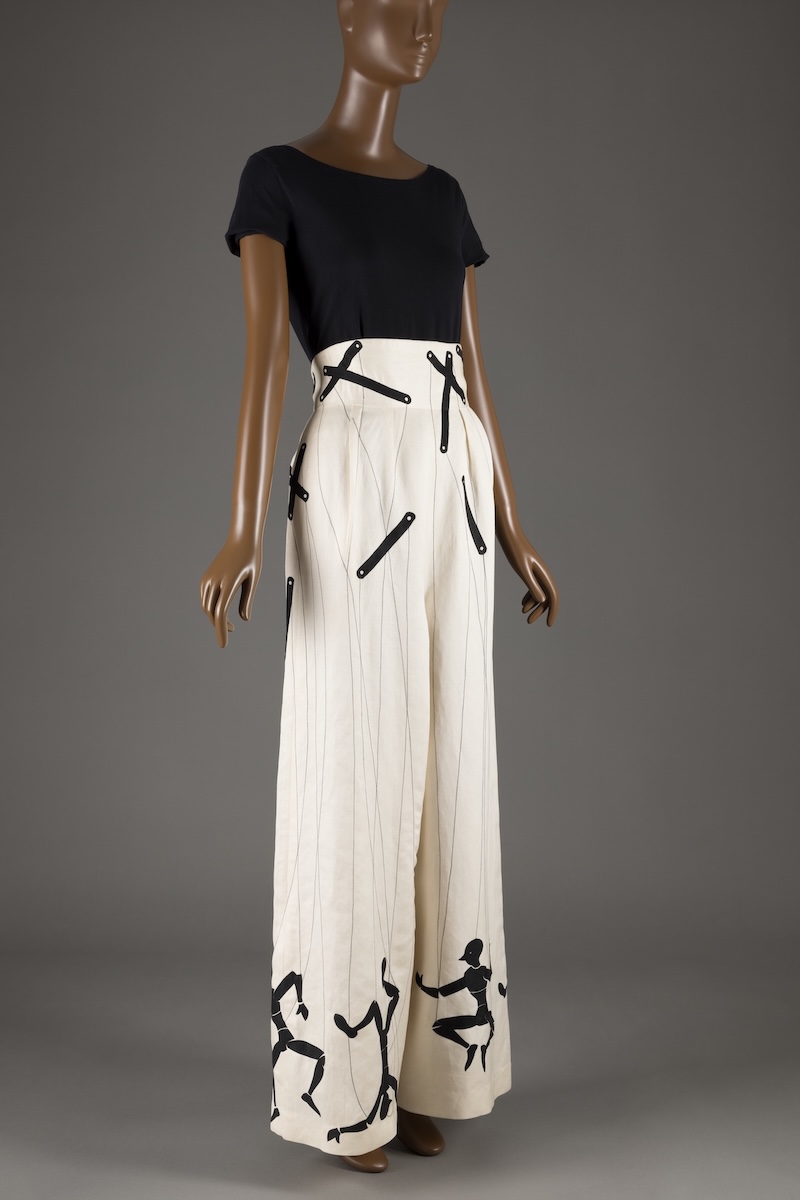
Trousers embroidered with marionettes.
Suit printed with trompe-l’œil drapery and a bow.
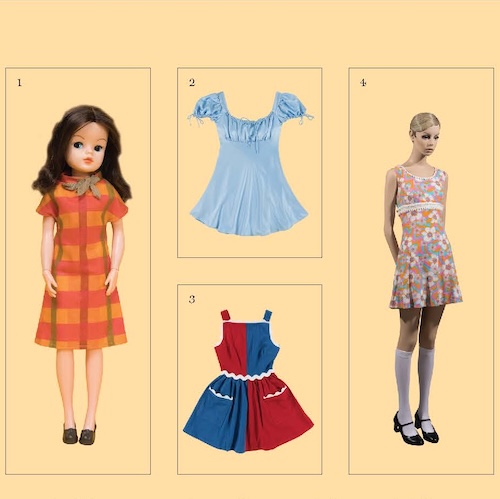
Pop-print mini dress, with knee socks and Mary Janes.
Doll in a monogrammed trench coat.
Doll in a floral sundress.
Doll-scale ensemble, with shawl and bag.
Circle-print shift dress, with matching kerchief.
Colour-blocked pinafore, trimmed with ric-rac.
Press
By the twentieth century, dolls “were no longer simply reproducing adult fashions in miniature; increasingly, their own proportions, styling, gestures, and fantasy worlds began feeding back into the way people dressed.”
Jane Francis, “Living Dolls: Doll Dressing at The Museum at FIT” · October 5, 2026
“The FIT exhibition shows that doll dressing is inclusive, and ultimately, more subversive than submissive. It can be fanciful, feminine, freaky, Barbie pink and gothic Lolita. It could be full skirts and voluminous dresses decorated with ultra-femme embellishments like . . . ruffles and lace. It can play with scale, from dollhouse to larger-than-life.”
Quinn Moreland, “At the Museum at FIT, an Argument for Dolls as the Ultimate Fashion Influencers” · September 30, 2026
“Today, many designers are eager to reconnect with the toy-box denizens who were their introduction to fashion, whether that was paper dolls or Barbies.”
Véronique Hyland, “Why Dolls Are a Perennial Fashion Inspiration” · September 7, 2026